
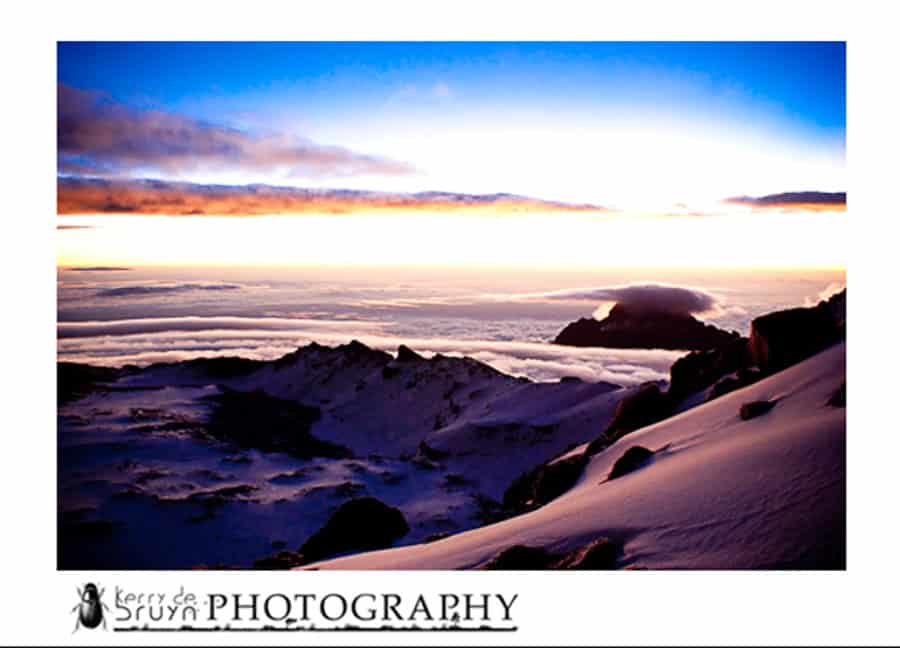
An interview with professional photographer Kerry de Bruyn.
Hi Kerry, thanks for taking the time to share with us your Kilimanjaro climb experience, I really appreciate it! 🙂
Tell us about your recent trip to Tanzania. How did the idea of climbing Mount Kilimanjaro come about? A dream of yours? A bet? 🙂
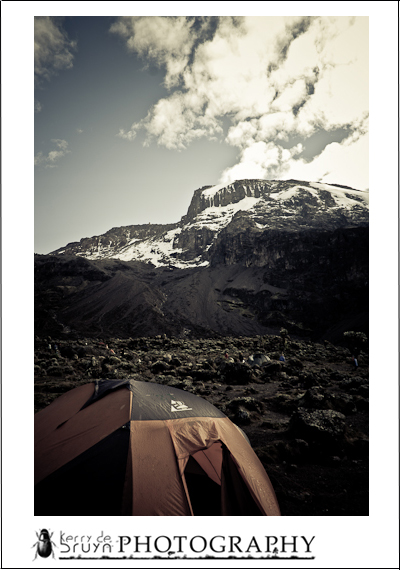
I know this sounds corny, but it really has been a dream of mine for a very long time. Africa for me is the most amazing place on earth and to be on top of it was just awe-inspiring for me. So last year I decided that no time is better than now, and immediately booked the trip!
How did you prepare physically for the Kili ascent? Did you go through a specific training program, did you follow any special regime (not that you need any lol)?
I trained for about 5 months before my climb doing cardio twice a week and building leg muscle once a week. I also went on a few hiking days in the Magaliesberg mountains close by and also tried to walk as much as I could about 2 weeks before I left (at least an hour a day).
How would you rate (on a scale of 0 to 10) the overall difficulty of the climb? Can anyone do it, or is it required to be a sports person?
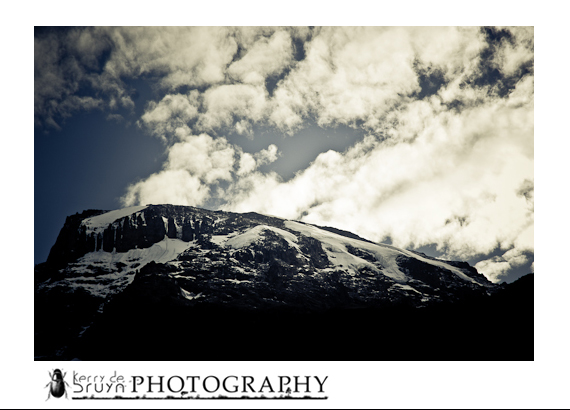
I think mentally if it is your dream, you’ll make it happen. But I wouldn’t ever say it was easy. The last day is very difficult as all of your walking and muscle aches and pains have built up. I’d definitely say you would have to like walking… a lot, but I don’t think you’d have to be a sports person. Overall I’d say the difficulty is around 8.
There are six main routes to climb Kilimanjaro: Machame, Marangu, Rongai, Shira, Lemosho and Umbwe. Which trail did you follow? Would you recommend it to trekkers, or is it a route for advanced climbers only?
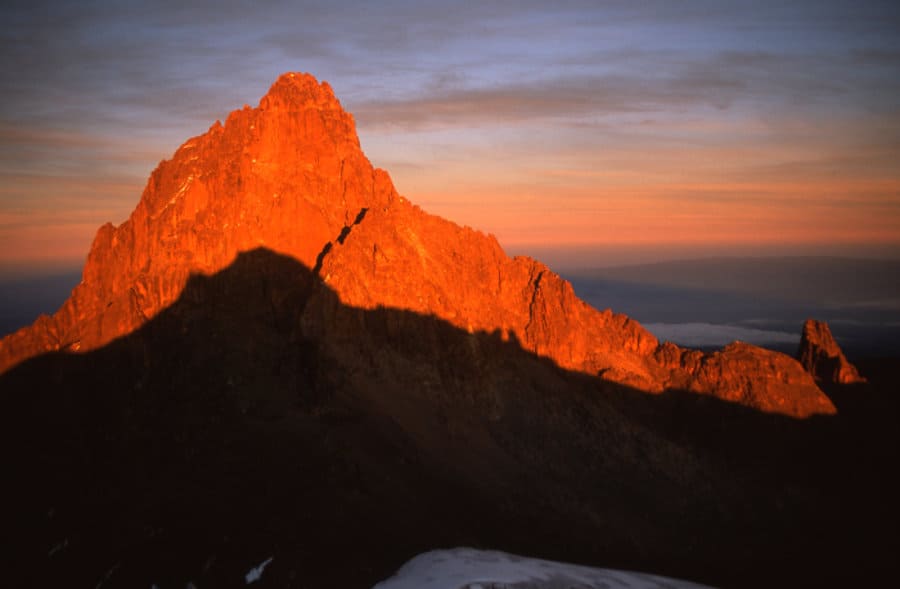
I used the Machame route. I’d definitely recommend it because the scenery was spectacular. It is known to be the most scenic route up the mountain. It’s not the hardest route going up but one of the harder ones so if anyone would like a challenge I’d recommend it too!
How long does it take to climb the mountain (if everything goes according to plans)?
You can climb it in 6 or 7 days depending on what you choose. I did it in 6 days but if you think you need an extra day to acclimatise or you don’t walk that fast, 7 would be better.
Take us on a typical trekking day on Kili: What do you do (besides walking 🙂 )? At what time do you usually wake up, how often can you stop to rest, etc?
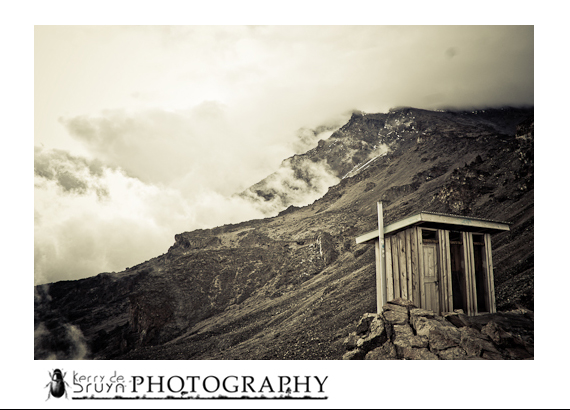
You wake up at around 6 am (usually from the chitter and chatter of the porters rather than choice), and get served breakfast in your mes tent (eating tent) at around 7 am. By 8 am you are ready to walk the next part of the trek. You’ll always either stop at a scenic place for lunch or eat your lunch on the way at a rest stop (depending on the weather and which day it is).
Resting is purely up to the individual and your guide will stick to whatever you can deal with. I didn’t rest often and was usually the first at camp which can be quite nice as you can use your extra time to enjoy the mountain and her scenery.
How many people were you during the expedition? How many porters, cooks, guides? How does the whole thing work? We want to know everything. 🙂
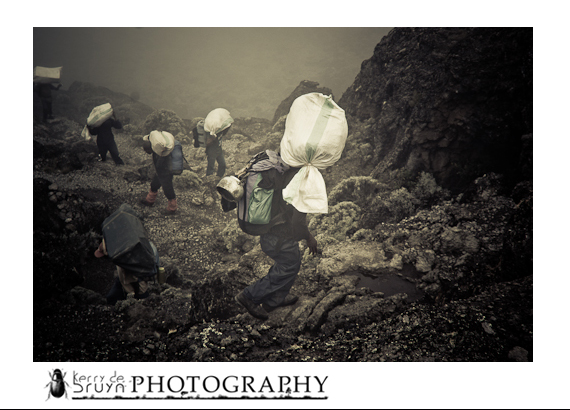
Each person has 3 porters who will carry your duffel bag, food, water and tent. The mes tent (eating tent) will be shared between them as well. You also have a cook who prepares all of your meals and then you have your guide, who stays with you the whole journey.
Porters and cooks often pass you on the path to the next camp with about 30 kg on their shoulders. They are incredible! You carry a day pack which consists of your water for the day (about 3 litres), rain gear and your camera. It’s quite heavy because of the water and mine was specifically heavy because of my camera!
About the packing: How many kg are you allowed to have during your Kilimanjaro climb?
You aren’t allowed to take more than 15 kg in your duffel bag but you can carry whatever you want in your day pack.
If you had 5 items to recommend, what would they be?
– Actual WATERPROOF waterproof jacket and pants (mine said they were, but weren’t!)
– A good waterproof cover for your day bag
– Good, non-slip hiking boots
– A big floppy hat &
– Really good snow socks for summit night (coming from SA where it doesn’t snow, I froze, even with them!).
Food is another key factor to consider during your trek. First of all, how was the food as a whole? From what I remember (from climbing Mt Meru), it is not always very tasty! 🙂
The food was great on the first night. I was highly impressed but as the days go on your food gets older and isn’t so fresh anymore. Let’s just put it this way: I hardly ate the last 3 days!
The altitude doesn’t help your desire to eat either and when their food is making you want to throw up you don’t want to eat anything. I don’t know how I did it but I survived on energy bars for breakfast, lunch and dinner for 3 days, even summit day. Like I said before if it’s your dream, you’ll do it.
Secondly, did you eat often during the climb? Energy bars, drinks?
Not really. I took loads of energy bars, chocolate etc but only really ate that stuff when I got to camp. I’d say isotonic sports drinks are more important. I drank plenty of those while walking.
Are there things you recommend not doing?
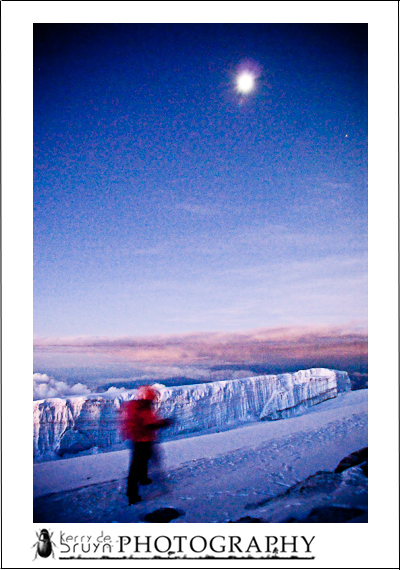
Trying to be tough and macho, and walking quickly while you are acclimatising. Chances are you’ll get sick. A guy right before us tried to do it that way and yes, he got sick, even though he was training for the army at home. Pole pole (“slowly slowly” in Swahili) is the way to do it. Oh, and packing a heavy day pack – not advisable.
Mount Kilimanjaro is one of the only places in Africa where you can find permanent snow. How cold is it really up there? Any time allocated to building “snowmen”? 🙂
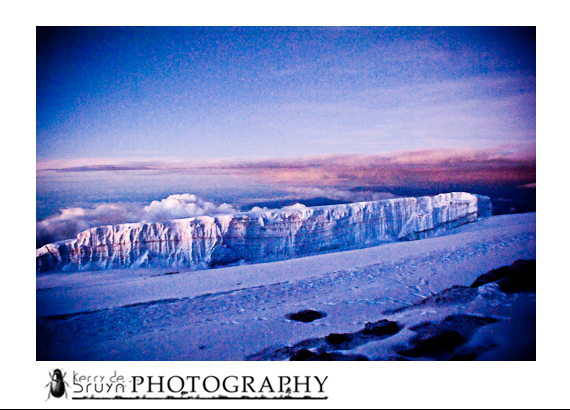
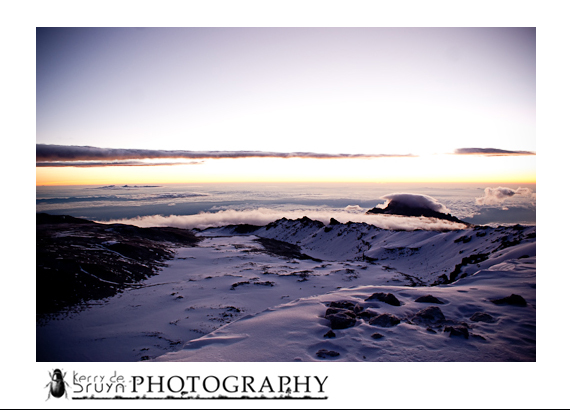
It’s freezing! Coming from South Africa didn’t help either. When we reached the top it was around -10° C but you don’t stay up there for long, mainly because people start to throw up from altitude sickness and you get too cold if you stop moving. We probably stayed at Uhuru peak for around 15 minutes.
I read recently that Kilimanjaro’s snow could be gone by as early as 2022 (kind of scary)! Would you agree with the statement? Any signs encountered to prove this? What is your say on the matter?
Honestly I’ve never seen so much snow in my life (probably because it was the first time I’d seen it)! But seriously, the weather when I went up was quite bad so there really was snow everywhere. It would be really sad if that was true as it’s a one of a kind thing and a sight I’ll never forget.
I guess asking you whether “you made it to the top” or not is rather unnecessary. 🙂 You can be proud of yourself, well done! How does it feel?
Were there moments in time when you REALLY wanted to quit? It must be an important mental battle, isn’t it?
Yes, I made it! 🙂 It was the most amazing thing I’ve ever done. It’s definitely a mental battle; a few in our group didn’t make it but for me, honestly, there was never a time I wanted to quit. It was too important to me to get to the roof of Africa! 🙂
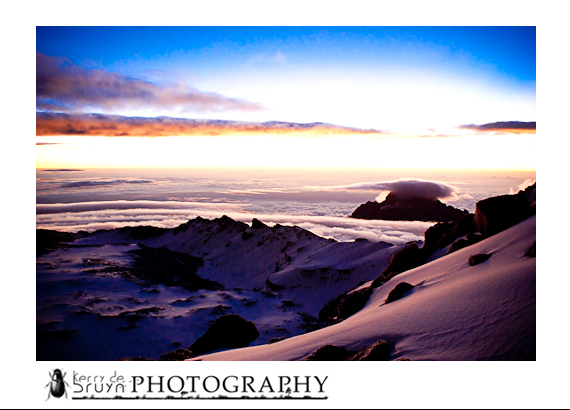
Kerry, thanks a million for your time. I’m sure your story will inspire people to follow their dreams, no matter what! 😉

This was an extremely informative interview! I especially loved the top 5 things to bring with you when climbing. I have visited Kerry's blog several times and I am always moved by her stunning photography.
Africa is by far one of the world's most exceptional places to photograph. We are actually hosting a safari tour in late 2010 titled "Africa in Focus," which brings safari participants to South Africa to photograph some of the most exceptional landscapes and wildlife in the world.
Great interview!