
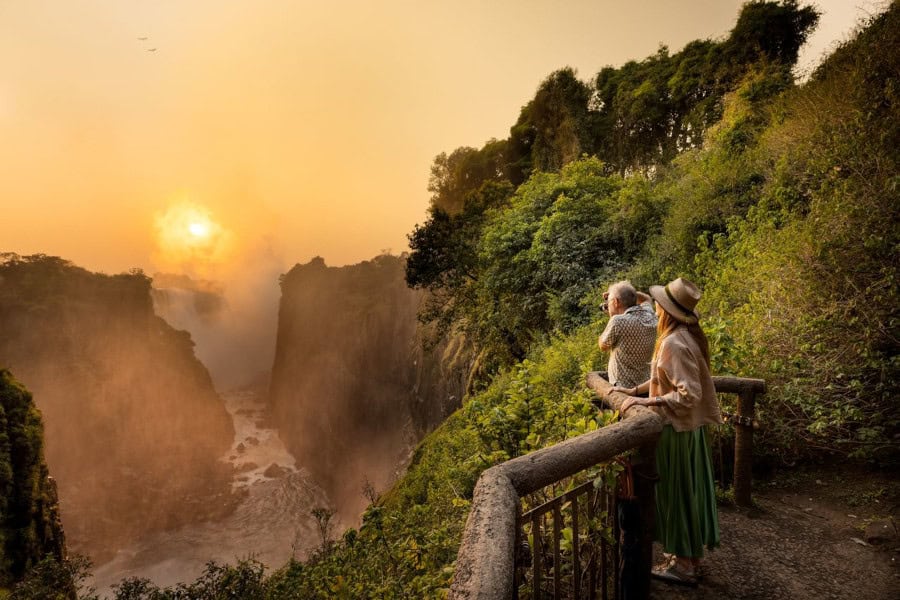
Before it reaches Victoria Falls, the Zambezi River has already extended itself over thousands of kilometers across southern Africa.
At the point where it reaches the border between Zimbabwe and Zambia, it has become the cause of one of the continent’s most remarkable natural spectacles.
Known as Mosi-oa-Tunya, meaning ‘The Smoke That Thunders’, Victoria Falls is noticeable due to the combination of sound, spray, and its great size.
Water drops into a narrow gorge and thereby forms a mist which rises above the adjacent forest. When viewed from a distance, the growing cloud makes the waterfall look as if it is floating above the ground.
The account of Victoria Falls does not start or finish at the rim of the gorge. The river still influences life in the area, whether it be the wildlife, which is attracted to its banks, or the experiences that lead visitors to get closer to this section of Zimbabwe.
In this place, the waterfall is at the heart of a much broader natural landscape.
A Waterfall That Changes With the Seasons
Each visit to Victoria Falls is different since the amount of water flowing over the edge varies from month to month, and this causes both the look of the waterfall and the way in which people see it to change.
When the water levels are high, the large volume of water falling produces a spray that can conceal sections of the gorge.
Walkers along the rainforest paths may find themselves surrounded by mist, and the visibility will vary depending on the wind over the falls.
In times when the water levels are low, individual parts of the waterfall and more of the underlying rock formations become visible.
No single condition gives the full picture. It is, in fact, the changing nature of the waterfall that makes it so attractive, and the best time to go there to some extent depends on what you want to see.
On the Zimbabwean side, there are various viewpoints, each offering a different perspective across the waterfall and gorge.
When you walk between them, you can see how the landscape varies along the length of the falls, and the sound together with the spray give an experience which cannot be reproduced by photographs alone.
Looking down from above gives a different view. When seen from a helicopter, the river approaches the cliff and then vanishes into the gorge, showing the special shape of the landscape beyond the viewpoints.

The magnitude of the waterfall is more easily grasped from the air, as is the steep course cut by the river.
For anyone who wants to understand the geography as well as see the spectacle, taking a ground visit together with an aerial view provides two entirely separate experiences.
Following the River Into the Wild

The Zambezi takes on the character of a destination beyond the waterfall.
Going on a river cruise gives you the chance to take in the surroundings at a slower pace, as the riverbanks are inhabited by a wide variety of birds and other animals, and hippos can often be seen in the water.
Even though elephants do at times go to the river to drink, there is no guarantee that you will see them.
As it gets darker in the evening, the river has a completely different atmosphere. Rather than concentrating on the roar of the waterfall, your attention becomes focused on the sounds and the things that are happening along the shore.
For photographers and anyone interested in nature, the more peaceful environment provides the chance to watch wildlife without having to deal with the constant activity linked to a busy sightseeing program.
If people want a more active type of experience on the Zambezi, there are other possibilities.
The activities available in the area will depend on the season, on the state of the water and on the operator’s availability, and they include canoeing, fishing, white-water rafting and other river-based adventures.
The experiences are quite different since a cruise involves mainly observation, whereas rafting focuses on the power of the river. Even though both activities take place in the same natural environment, they get visitors to interact with it in completely different ways.
The fact is important considering the power of the Zambezi River. Travelers should contact trustworthy local operators before booking any water-based activities to find out about seasonal availability and safety requirements.
The Landscape Beyond the Water

Victoria Falls is also taken as a starting point for exploring the different wildlife areas of southern Africa.
In Zimbabwe, game drives are possible in the area nearby, while a more thorough safari experience can be had by going further into the country to Hwange National Park.
On the other side of the border, Botswana’s Chobe National Park is an additional place famous for wildlife watching and so could be included as part of a tour in the region.
All places have their own particular qualities and should not be regarded as equivalent safari destinations.
The choice that is appropriate will depend on the amount of time one has, on the animals and habitats that the traveler hopes to see, and on how much travel they would like to include in the trip.
A short game drive around Victoria Falls may provide certain visitors with a favorable first impression of the area’s wildlife.
Or they could choose to visit the waterfall and then spend several days at a safari resort, making wildlife watching their main activity.
It is this feature which makes the area so attractive, since while there you are able to see the rainforest around the falls, the open river, the nearby bush, and the broader wilderness of Zimbabwe and its neighboring countries.
In addition, there are adventure activities such as bungee jumping and gorge swinging for travelers who wish to have a more physical interaction with the landscape.
However, since these activities are not suitable for everyone, they illustrate the fact that the same landscape can be explored through wildlife observation, by scenic touring, or through adrenaline-filled experiences.
It is important to realize that Victoria Falls is not merely a single kind of destination.
Even though it is the waterfall that draws in tourists, the surrounding area offers a number of other ways of becoming connected with the region.
Staying Close to the Landscape
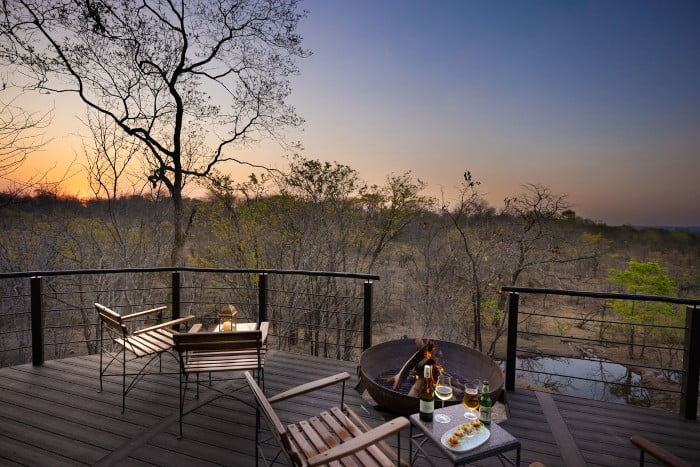
The place where you stay can affect your Victoria Falls experience, especially if the trip involves a number of different activities.
Albida – Victoria Falls opened on 1st September 2026 and is a new type of accommodation in the area. It is run by Africa Albida Tourism as part of the Victoria Falls Safari Collection and is located approximately 2.5 miles from the waterfall.
In Albida, there are 13 private villas, comprising 10 one-bedroom Deluxe Villas and three two-bedroom Family Villas. All the villas have their own terrace and plunge pool.
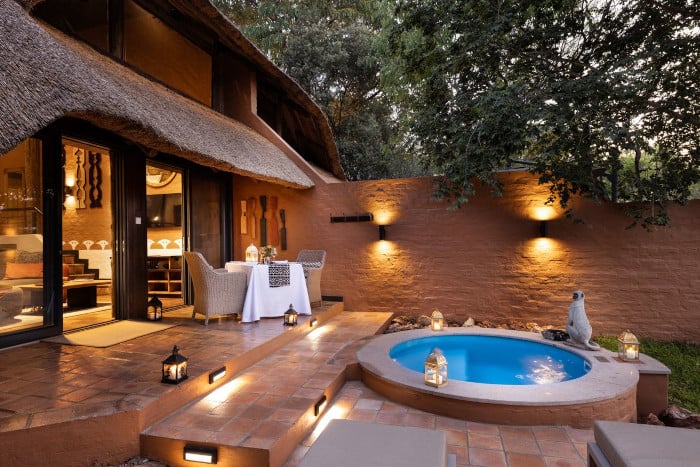
The Family Villas have two en-suite bedrooms, which are connected by a shared living room and can thus hold a maximum of four guests.
Rather than having the typical arrangement found in hotel rooms, the property gives clients private outdoor spaces in which they can spend time together and take part in all kinds of activities.
This type of setup is suitable for couples, families, and small groups whose interests may change from time to time.
The package covers the cost of accommodation, meals and drinks, a butler service, laundry, airport transfers, and transport to the different activities.
The experiences provided include guided visits to Victoria Falls, helicopter flights, game drives, spa treatments, and The Boma – Dinner & Drum Show, as stated in the package and subject to applicable conditions.
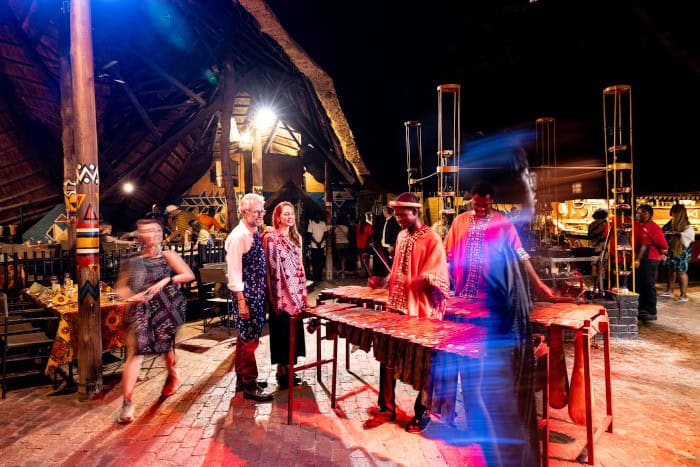
For anyone traveling in the area, this setup provides a convenient place from which to plan all sorts of excursions.
If you visit the waterfall in the morning, you can then have a more peaceful afternoon. Guests who are interested in wildlife or would like to see views from the air can easily make such arrangements as well.
Since it supports the Victoria Falls Anti-Poaching Unit and runs an off-grid solar power system, the property is involved in conservation work in the area.
It is named after the native Albida tree, which enriches the soil under its canopy.
It therefore provides yet one more way of linking a visitor’s sojourn to the wider environment.
Accommodation is part of the tourism environment surrounding Victoria Falls, and the way in which the properties operate can help create a connection between visitors, local conservation initiatives, and the natural resources on which tourism depends.
Tourism and the Future of a Wild Place
People are attracted to Victoria Falls due to its outstanding natural beauty, but the area’s appeal also comes from the landscapes and wildlife found outside the waterfall.
The river, the nearby habitats, and the adjacent protected areas form a more extensive ecological environment that extends across national borders.
There are good reasons why tourists should go beyond the standard viewpoints, for only by studying the river, watching the wildlife in a responsible way, and exploring the wider area will they be able to gain a greater understanding of the waterfall and the environment which supports it.
It is just as important to realize that encounters with wildlife are unpredictable and that natural conditions may change.
By showing responsibility, giving the necessary safety instructions, and treating wildlife with respect, you can ensure that the experiences take place in harmony with the environment.
The fact that there are accommodation options should also be taken into account, since Albida’s support for anti-poaching campaigns and its use of off-grid solar power are examples of how tourism businesses can link their operations with the local environment.
But each individual initiative must still be evaluated in terms of its broader conservation impact.
Victoria Falls is not merely a spectacular assortment of water, rock, and air. It makes up part of a living landscape that has been formed by the Zambezi River, and which is used by both the wildlife and the people of southern Africa.
Although the waterfall is the most noticeable feature of the landscape, if you follow the river, explore the surrounding bush, and take notice of the natural environment beyond the spray, you will see a more detailed account of this remarkable part of Africa.


