Amboseli is one of those places that almost every wildlife photographer recognises before they have ever been there.
Elephants crossing the open plains with Mount Kilimanjaro rising behind them has become one of the classic images of Africa, and understandably it is a photograph many of us would love to have in our portfolios.
My elephant photography has taken me to several parts of Africa, but Amboseli remains one of my favourite places to work.
After spending considerable time photographing elephants here, I have come to realise that the area offers much more than that one famous composition.
For me, photographing elephants in Amboseli is less about camera settings and equipment and more about understanding the animals, anticipating where they might go, choosing your position and then having the patience to wait for all the elements of a photograph to come together.
Watch Before You Photograph
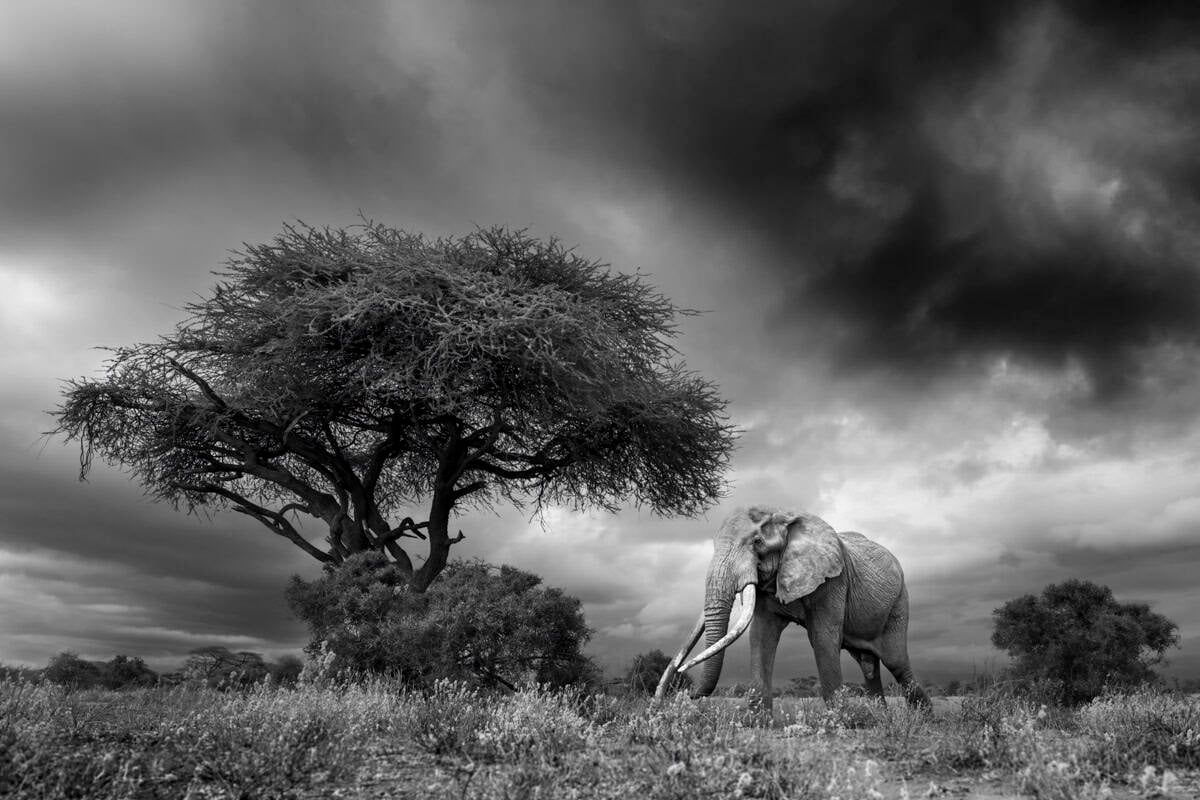
Finding elephants in Amboseli is rarely the biggest challenge. The more important question is what they are doing and where they are likely to go next.
A herd feeding slowly behaves very differently from a family moving purposefully towards water, and the longer you spend watching elephants, the more you begin to recognise these differences.
Instead of immediately concentrating on taking photographs, I often spend time looking at the direction they are moving, the landscape ahead of them and what might happen if they continue along the same route.
This is also where having a good guide becomes incredibly important. I don’t necessarily want to get as close to an elephant as possible. Quite often I want the opposite.
If the roads and park regulations allow it, I would rather position ourselves farther ahead, switch off the engine and wait for the elephants to come towards us naturally.
It gives them complete control over the encounter and, photographically, it gives me time to think about the background, the light and how the animals might eventually enter the frame.
Include Amboseli in the Photograph
African elephants make wonderful portrait subjects, but Amboseli is one of those places where I often find myself reaching for a shorter lens rather than a longer one.
The open plains, dust, distant hills and enormous sky are all part of what makes this ecosystem special, and sometimes giving an elephant more space within the frame actually makes the animal feel more impressive.
The landscape provides scale and context, and the photograph becomes not simply a picture of an elephant, but a picture of an elephant that could only have been made in Amboseli National Park.
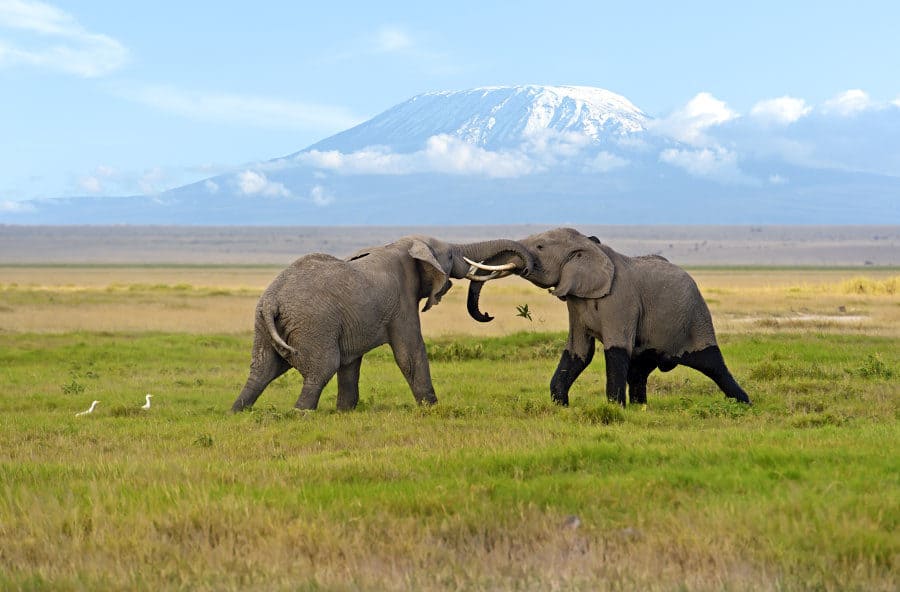
Of course, there is also Mount Kilimanjaro. Everyone wants that photograph, myself included, but simply placing elephants in front of the mountain doesn’t automatically create an interesting image.
The position and separation of the animals matter enormously, as does the relationship between the elephants and the mountain. Even small details such as the position of a trunk or an ear can completely change the outline of an animal.
Kilimanjaro also has a habit of disappearing behind cloud at exactly the wrong moment, so getting all of those elements together can require considerably more patience than the finished photograph suggests.
Eight Days for One Photograph
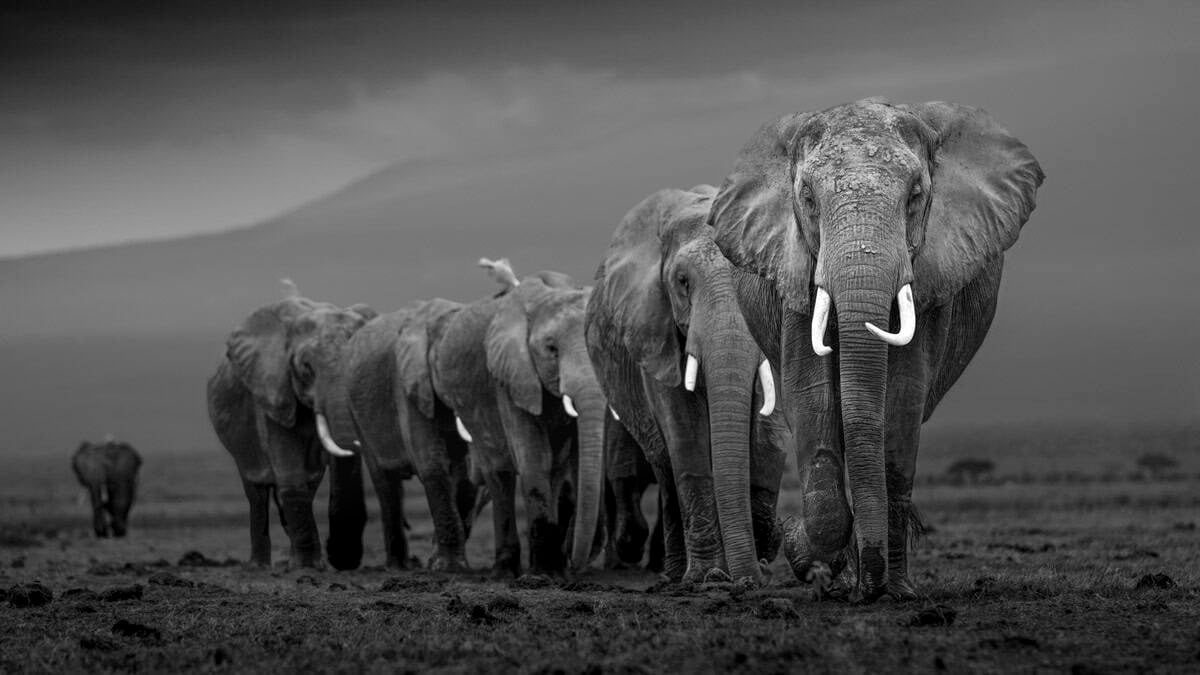
One of my photographs, At the Foot of the Mountain, is probably the best example of how I approach photographing elephants in Amboseli.
I arrived with a fairly clear idea of the photograph I wanted to make: a group of elephants moving across the open landscape.
But I didn’t simply want elephants standing in front of a mountain. I wanted separation between the animals, a clean background and some kind of natural flow through the group.
For eight days I watched, waited and tried different situations without getting exactly what I had imagined. There was a lot of details that needed to happen at the same time for the image to work as I had envisioned it.
- The elephants needed to walk in single file.
- They needed to approach me at an angle so that every elephant remained visible.
- They needed to maintain a similar distance from one another, without any major gaps between individuals.
- Other tourists and vehicles in the area needed to behave responsibly so as not to scatter or disturb the elephants.
- I wanted a cloudy day to add some drama to the scene.
- The lead elephant needed to flap its ears to create that classic elephant silhouette.
- The lead elephant needed to have a good set of tusks.
- I needed a clean background without bushes or trees.
- I needed to photograph from a low angle to emphasise the size and presence of the elephants.
- I wanted the elephants as close as possible so I could avoid using the longest telephoto lenses.
- And all of this needed to happen close to a road, since driving off-road is not permitted in most areas.
Eventually, a group led by a female called Gigabyte began moving across the plains in single file. The elephants gradually formed a beautiful natural curve and, for a brief moment, the spacing between the animals was almost exactly what I had hoped for.
Even then, there was one final detail. Gigabyte’s ear moved forward, separating the outline of her head from the elephant behind her. Everything came together for only a moment, but that was enough.
At the Foot of the Mountain has since become one of my best-selling photographs and the most internationally awarded image in my portfolio.
That experience also reinforced something I have learned repeatedly in wildlife photography: patience doesn’t simply mean sitting around waiting for something exciting to happen.
It means remaining engaged with what is happening in front of you, constantly watching the animals and the landscape and being ready when the opportunity finally appears.
Sometimes the photograph happens immediately.
Sometimes it takes eight days or more.
Photograph the Elephant, Not Just the Tusks
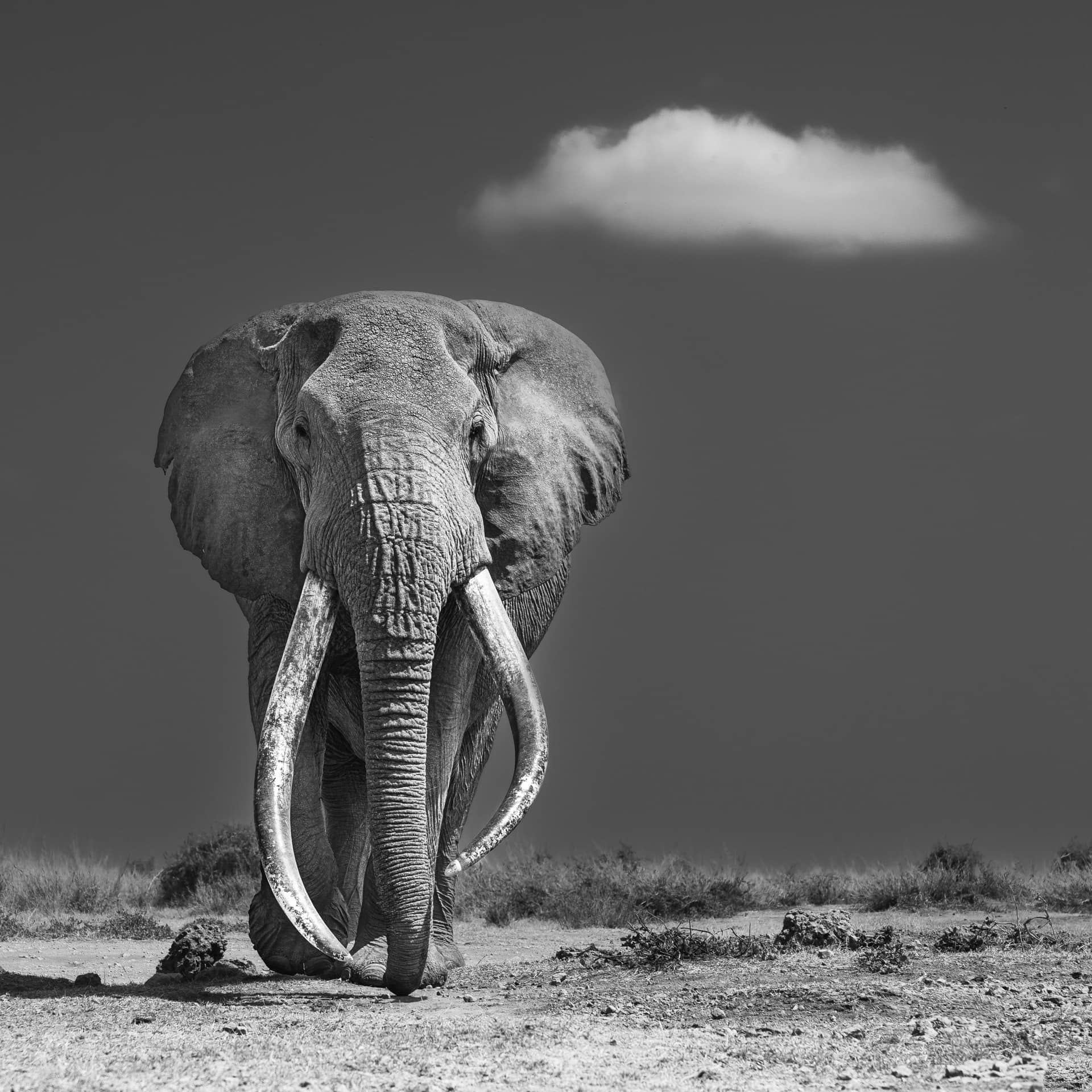
Amboseli is also one of the few places where it is still possible to encounter some of Africa’s great tuskers, and photographing these enormous bulls brings a different challenge.
When an elephant carries exceptional ivory, the temptation is naturally to make the tusks the entire photograph. They are extraordinary, but I think concentrating only on them can sometimes mean overlooking the character of the elephant carrying them.
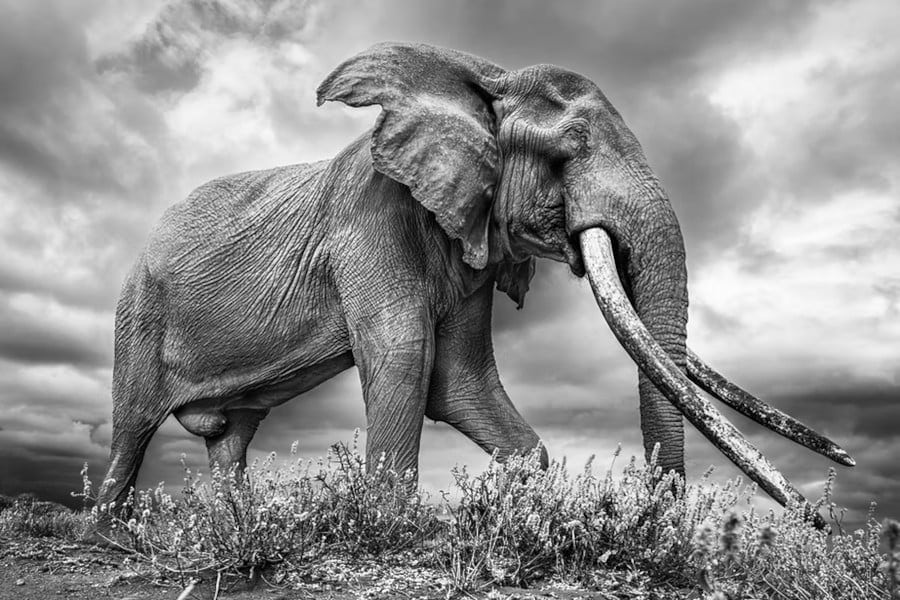
Craig was a wonderful example. He became one of Amboseli’s best-known elephants and one of Africa’s most recognisable super tuskers.
When I had the opportunity to photograph him, I wanted the photographs to convey something of his presence rather than simply document the size of his ivory.
One of my favourite images of him eventually became Beneath the Cloud.
Craig is walking almost directly towards me, his tusks framing his trunk, while a single cloud hangs in the otherwise empty sky above him.
There is very little else in the photograph, and that simplicity is exactly what I like about it.
Craig didn’t need Kilimanjaro behind him or dramatic behaviour to make an impressive photograph. He was enough.
Let the Elephants Set the Pace
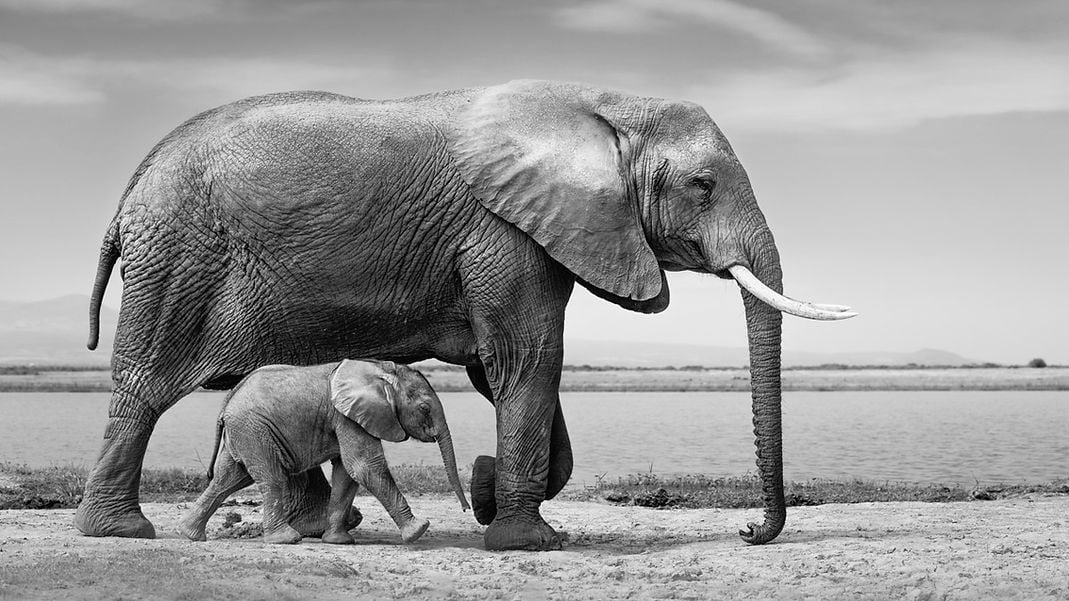
Perhaps the most useful advice I can give anyone travelling to Amboseli specifically to photograph elephants is not to rush.
Safari naturally encourages us to keep moving. We photograph a herd of elephants and then start wondering whether there might be lions or cheetahs somewhere else.
But if elephants are your priority, staying with them can completely change the experience.
The longer you spend with a family, the more you begin to notice relationships between individuals, recognise changes in behaviour and anticipate what might happen next.
It is often during these quieter periods that some of the most interesting photographs appear.
A calf sheltering beneath its mother, two elephants touching trunks, an old bull slowly approaching or a family disappearing into dust can say as much about elephants as a dramatic charge or confrontation.
Once you stop constantly looking for the next subject, you also begin paying much more attention to small changes in light, background and composition.
Amboseli already provides an extraordinary stage for elephant photography. I don’t think we need to force much more onto it.
My approach has increasingly become one of simplification: understand the animals, look at where they are going, find a position that might work and give them the space to decide what happens next.
Sometimes nothing comes of it, and that is simply part of wildlife photography.
But occasionally the elephants move into exactly the right place, the mountain emerges from the clouds or a single ear moves a few centimetres in the right direction, and suddenly everything you have been waiting for is there.
Those are the moments I go to Amboseli for.
“In the stillness of the wild, we remember how to be alive.” * Johan Siggesson